
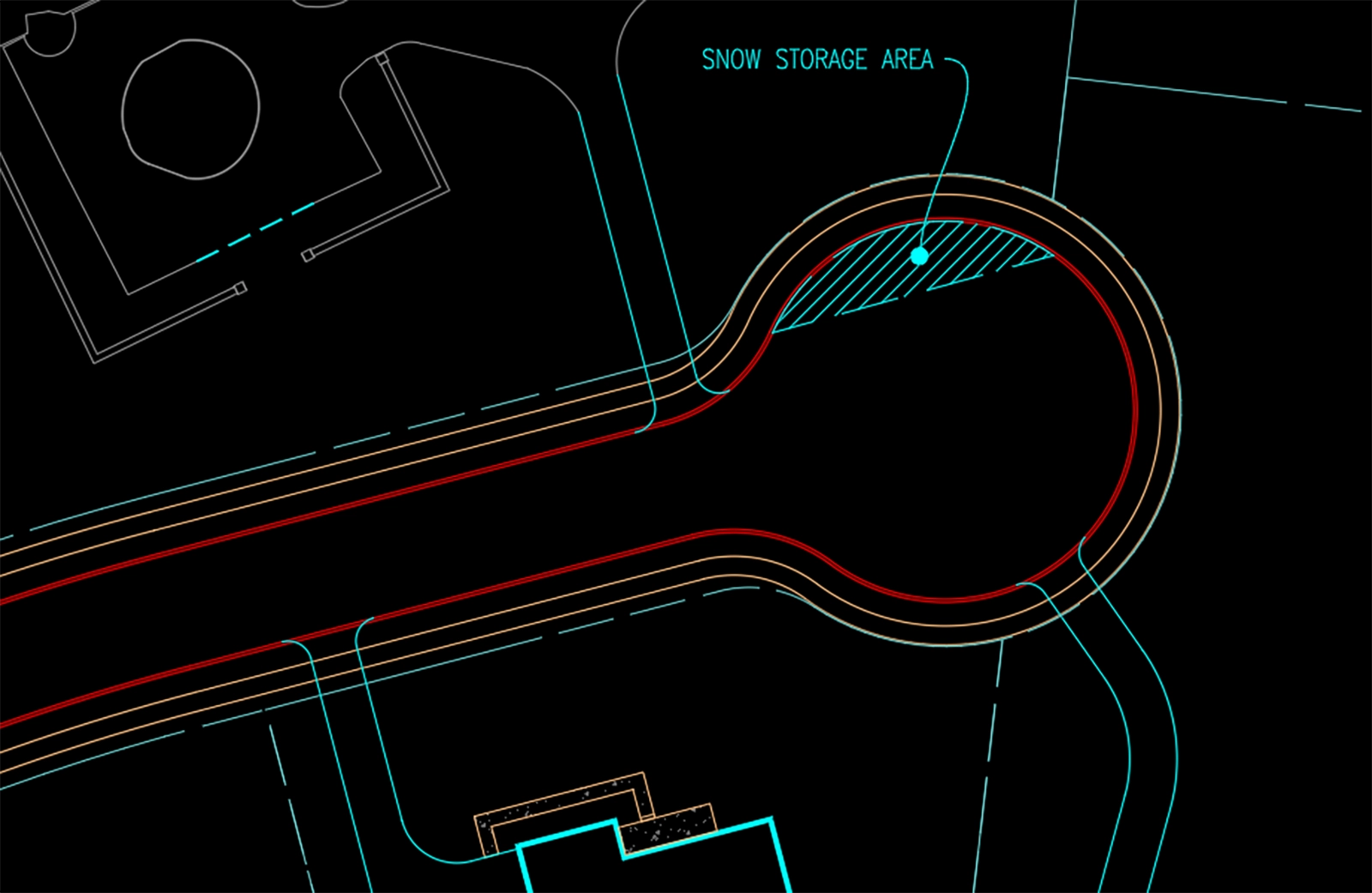
This past weekend's storm marked the second time we've had a double-digit snowfall this year. When you’re a kid, you dream about these massive storms in hopes of being off from school and getting to play with your friends. When you’re an adult, big storms are not so fun, especially shoveling your driveway and walkways just to get out of the house. Well, when you're a civil engineer, you tend to look at these storms a little differently, and a recent review comment on one of my projects had me thinking more...
The comment was: “Show snow storage and drainage area(s) on the plans.”
This comment was interesting because it has never been required for any plans I’ve completed. But after some thought, I realized how valid it is. With significant snowfalls, clearing a parking lot often results in enormous snow piles. The snow contractors do their best to push the piles out of the way, but when the snow totals reach double digits, they run out of places for it.


As design engineers, we calculate the exact number of parking spots needed for a building based on the number of employees and the building's square footage. In the winter after big storms, in many cases multiple parking spots are taken up by snow piles. This parking shortage can be significant, if you’ve ever been to the Howell office, you know every spot counts.
Sight distance can also be affected by snow piles. In the design process, we’re required to calculate sight distance at intersections and driveways. In non-engineering terms, this is basically making sure you can see enough to pull out onto the road safely. I’ve noticed this winter how giant snow piles have reduced sight distance at certain intersections, making it more dangerous if people aren’t careful.
To wrap up, snow storage areas may become the standard as we continue to design and develop plans. Designating these areas would allow for snow clearances. And no matter how much falls, we’d always have the required parking spaces available, and proper sight distance for pulling into traffic.
Hopefully, we aren't talking about snow much longer, and spring is right around the corner. Until next year, snow!


